Partnership announced at Capital Club Dubai highlights a more integrated approach to low-carbon construction, circularity and sustainable infrastructure
Dubai, UAE – The UAE’s next phase of development is increasingly being shaped not only by the scale of investment but by how effectively sustainability can be built into projects from the earliest stages.
That theme was at the centre of discussions at “Where Capital Moves Next | The New UAE Agenda”, held at Capital Club Dubai in DIFC on September 17, 2026. The gathering brought together professionals from investment, real estate, infrastructure, engineering and sustainability to explore how emerging opportunities can move from ambition to practical implementation. The programme included discussions around sustainable development, e-mobility, circularity and waste management, alongside other areas relevant to the UAE’s development agenda.
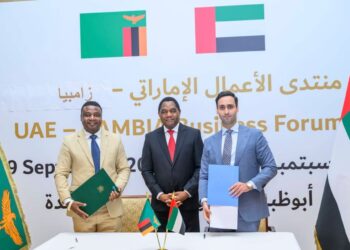
One of the key moments of the event was the signing of a Memorandum of Understanding between Holcim UAE and the National Development Consortium (NDC).
The partnership places collaboration across the built-environment value chain at the centre of its approach, with an emphasis on bringing developers, planners, industrial stakeholders, technology providers and other project partners closer together at the planning and delivery stages.

Moving sustainability upstream
For large-scale construction and infrastructure projects, decisions made during the earliest stages can influence material use, resource efficiency, project costs and environmental performance for years to come.
The Holcim UAE and NDC partnership seeks to address this by encouraging sustainability considerations to be integrated into projects from the outset rather than introduced as a later-stage intervention.
According to Holcim UAE, the collaboration is intended to bring low-carbon materials, circular construction practices and sustainable building solutions into project planning while improving coordination between the different organisations involved.
This approach reflects a broader shift within the construction sector. Instead of viewing sustainability as the responsibility of a single contractor, consultant or materials supplier, the emphasis is increasingly moving towards collaboration across the entire project ecosystem.
From individual projects to value-chain integration
The partnership’s significance lies partly in its focus on connecting different parts of the development process.
Developers and master planners establish project requirements. Engineers and designers translate those requirements into technical solutions. Material manufacturers influence the resources used to deliver those designs while energy, logistics, waste management and technology providers contribute to how projects operate throughout their lifecycle.
Bringing these perspectives together earlier can create greater scope for coordinated decisions.
Holcim UAE has positioned the agreement around this principle, describing the collaboration as an effort to bridge the gap between sustainability ambitions and project delivery. Its portfolio in the UAE includes low-carbon cement and concrete solutions as well as circular construction initiatives through its wider operations.
For NDC, the collaboration provides a platform for connecting industrial expertise with development opportunities and project execution. NDC representatives have described the partnership as focused on bringing investors, engineers, construction specialists and project leaders together from the beginning of development programmes.
Circularity moves closer to the construction site

Construction and demolition waste remains an important consideration for rapidly developing cities. A circular approach seeks to retain the value of materials for longer by recovering, processing and reusing resources wherever technically and commercially feasible.
This is one of the areas highlighted through the partnership.
Holcim UAE has been developing circular construction solutions through initiatives such as ECOCycle and its Geocycle waste-management activities. The company has also highlighted the use of waste streams as alternative resources in cement production.
The broader opportunity is to move beyond a traditional linear model in which raw materials enter a project, are used and eventually become waste.
Instead, construction materials can increasingly be considered part of a wider resource cycle, where suitable materials from existing structures or other waste streams can potentially be recovered and redirected into new applications.
This concept becomes particularly relevant in a market such as the UAE, where continued urban development is creating both demand for new infrastructure and opportunities to rethink how existing resources are managed.
Sustainable infrastructure requires more than materials
The scope of the collaboration extends beyond low-carbon construction materials.
The partnership discussions have identified areas including resilient infrastructure, smart industrial development, green logistics and warehousing, as well as sustainable workforce accommodation. These areas point to a wider understanding of sustainability in which the environmental performance of a project is influenced by its supporting systems as much as by the structure itself.
Logistics, for example, can influence transport requirements and associated emissions across complex construction programmes. Industrial development can create opportunities to integrate resource efficiency and advanced technologies into facilities from the design stage.
Similarly, workforce accommodation can be considered through the lens of scalability, resource efficiency, safety and long-term operational requirements.
The common thread is integration.
Connecting investment with sustainable development
The event itself was built around the question of how capital can support the UAE’s next phase of development.
That connection is important because sustainable projects increasingly need to demonstrate both environmental value and a credible pathway to implementation. Investment decisions, technical feasibility, infrastructure requirements and sustainability objectives cannot always be considered separately.
During the event, participants discussed the importance of moving from sustainability ambitions towards measurable and investable opportunities. The Holcim-NDC agreement emerged within that broader conversation.
The involvement of stakeholders from the development and energy ecosystem also underlined the cross-sector nature of the discussion. Eng. Faisal Ali Rashid of the Dubai Supreme Council of Energy contributed to a fireside conversation, while representatives associated with ALDAR shared perspectives on sustainable development. Dr. Samiullah Khan moderated discussions during the event.
The real test begins after the signing
Memorandums of understanding often mark the beginning of a collaboration rather than its final outcome.
For the Holcim UAE and NDC partnership, the next stage will be translating the areas identified in the agreement into projects, partnerships and measurable results.
That could involve bringing sustainability considerations into master planning, identifying opportunities for circular material flows, connecting technology and industrial capabilities, improving project coordination or developing new models for sustainable infrastructure delivery.
The practical value of the partnership will ultimately depend on what follows the signing table.
For the UAE’s built environment, however, the direction is increasingly clear. Sustainable development is becoming less about isolated initiatives and more about how effectively different parts of the value chain work together.
As the country’s cities, infrastructure and industrial base continue to evolve, partnerships that connect capital, technical expertise, materials, technology and sustainability objectives could become an increasingly important part of turning long-term ambitions into projects on the ground.
The Holcim UAE-NDC agreement is therefore not simply another corporate partnership. It represents an attempt to bring different capabilities into the same conversation earlier in the development cycle – where decisions can have the greatest influence on how projects are designed, delivered and operated.
The next measure of progress will be what that collaboration builds.